Aaron
posted this
23 December 2025
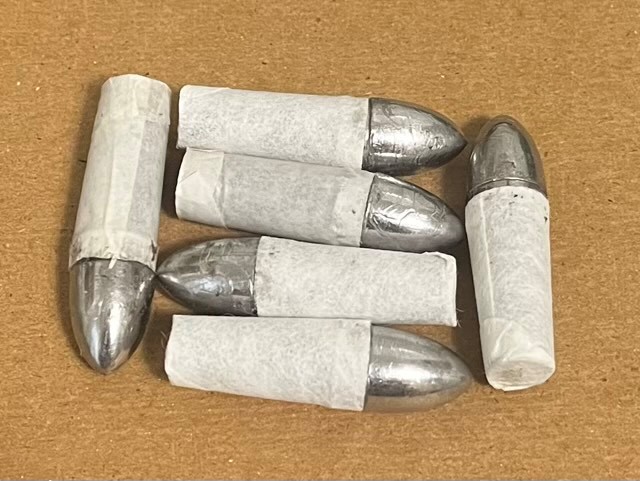
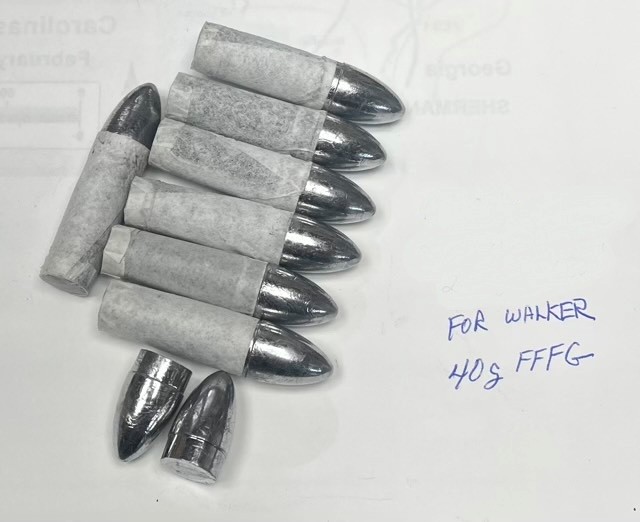
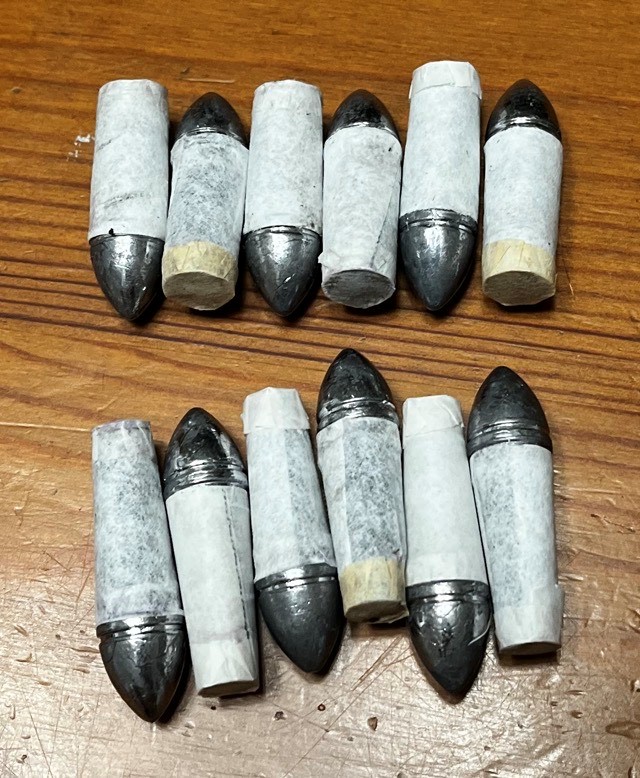
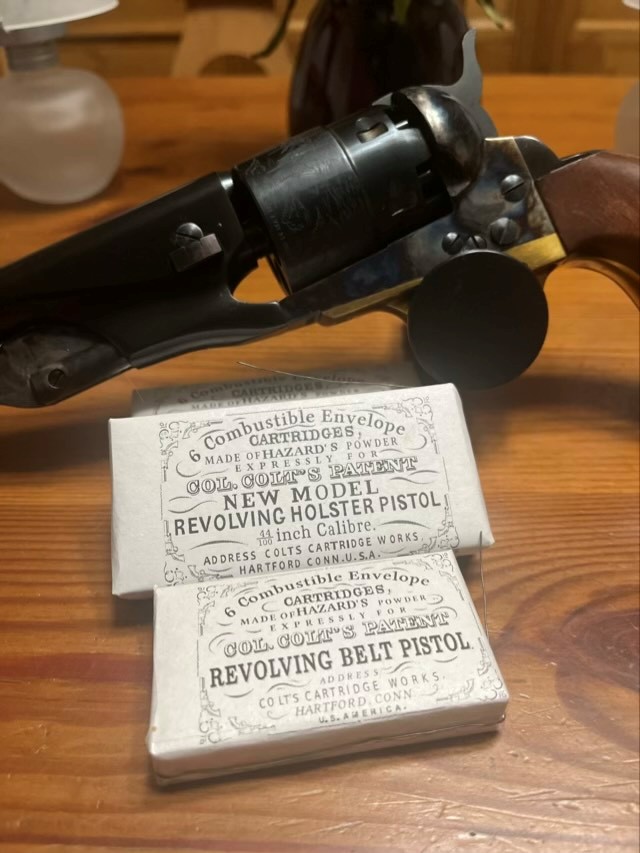
As member Wilderness likes to remind us, "You are only as good as your library" so like him I went and acquired all the published material I could on the paper cartridge making subject. My first paperback was the book How to Make Cap and Ball Revolver Cartridges and Packets by John Gurnee, ISBN: 9781523205646. His publication has some wonderful dimensions on making cardboard packages for the produced cartridges as well as label templates.
I started with a homemade mandrel produced crudely with sandpaper and blades since I have no lathe nor any friends with a woodworking lathe. My crudely produced wooden mandrel obviated the drawbacks of a simple mandrel with no forming sheath like the now available commercial 3-D printed ones made of plastic. Wooden mandrels need constant waxing to prevent paper from adhering to them and wear quickly at the cut line from constant cutting with a razor blade. While a wooden mandrel produced on a lathe will work a lot better than my cave-man one, they do have drawbacks except for the pride of using one you made yourself.
To support small businesses in our hobby and to take advantage of material improvements I then bought some commercial tools made by Balazs Nemeth of CapandBall fame, Dustin Weinegar of Guns of the West, and finally, tools made with Crossen Cartridge mandrills. The former from CapandBall when first ordered a few years ago was wooden. Now I think his mandril former is 3-D printed plastic with a wooden former sheath.
The plastic tools work far better than wooden ones since the cartridge paper doesn't glue itself to the wood tool. The tool produced by Dustin (Guns of the West) is probably the one I use the most since I can use either coffee filters, 9# paper patch paper, or any paper that will burn. I do NOT treat the paper with nitrate since it has NO EFFECT on chamber residue. You still have gobs of paper residue after firing with or without the treatment.
The tool produced by Crossen Cartridges is an amazing thing. That man is genius and his tools reflect this. Lots of thought went into them and his Cartridge Kits have everything you will need to make the cartridges and their respective boxes. For museum grade product, this is the way to go and frankly, the mandrel with his provided treated papers, ready to roll, is by far the easiest to use. Length of the cartridge can't be modified however for various bullets. The Johnston & Dow bullet in 44 and the Colt Cartridge bullet in 36 caliber are the ones his former and papers are made for. Even using my own paper, the trim lines on the forming mandrel necessitate trimming at a specific location for those mentioned bullets.
I'm sure an internet search will reveal at least a dozen commercially produced cartridge formers on the market by now. The homemade wooden dowel tool is the easiest to make yourself. Keep that rascal waxed!
With rifle in hand, I confidently go forth into the darkness.

.jpg?width=20 "JBinMN")