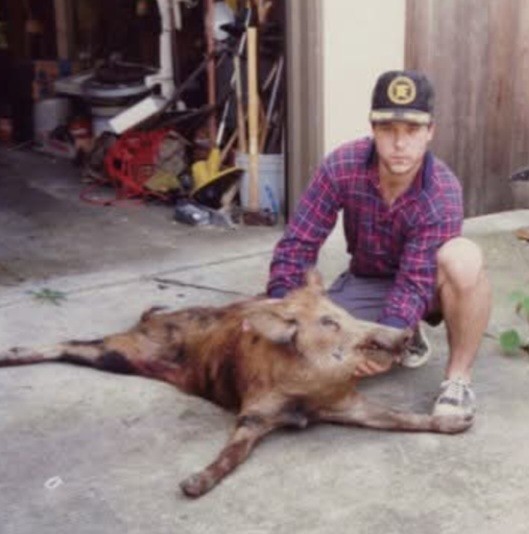
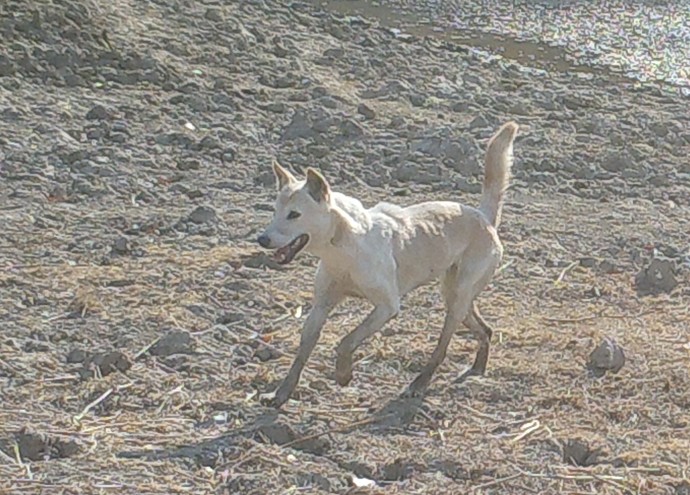
I have posted a number of images of pigs shot at night and descriptions of results. This has been on the assumption that some of the more adventurous cast bullet shooters might like to know what works on real flesh and blood. The issues covered have been hollow point versus solid, bullet hardness, and shot placement, all from a full power .30-30 perspective. These posts are now mostly under “Hunting with cast bullets”.
Pigs are most active at night, especially if they are being harassed, so that can be a good time to hunt them.
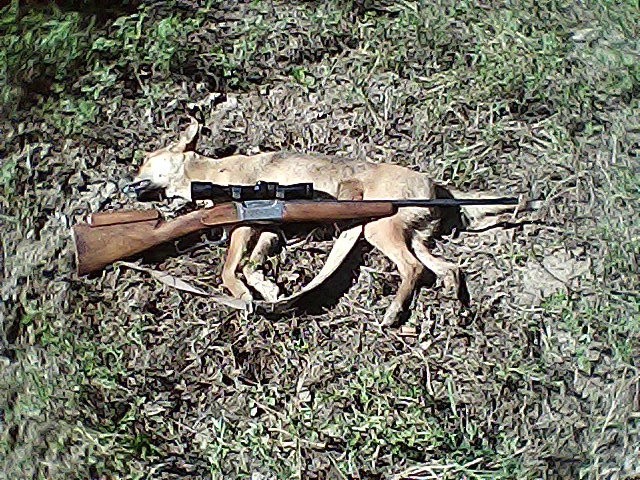
All recent shooting has been with a scope sighted Savage 99 .30-30, using 2200 fps 175 gn hard hollow point cast bullet loads.
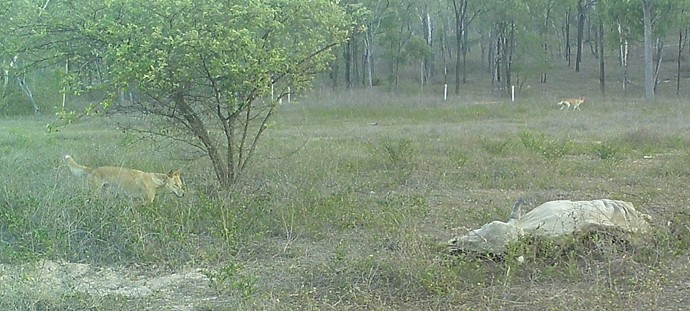
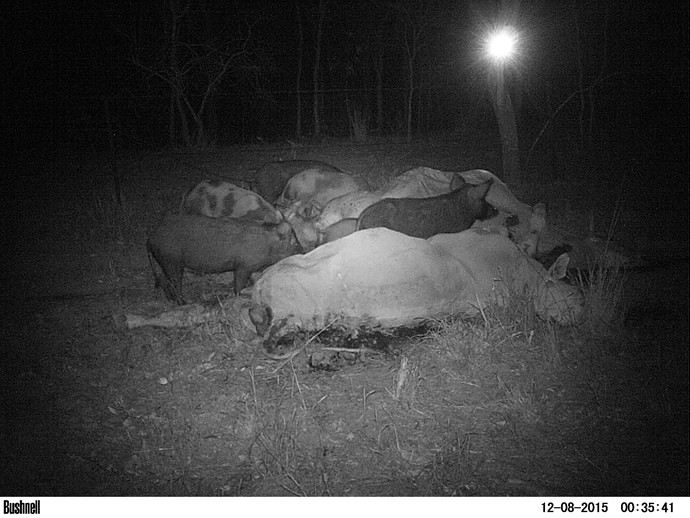
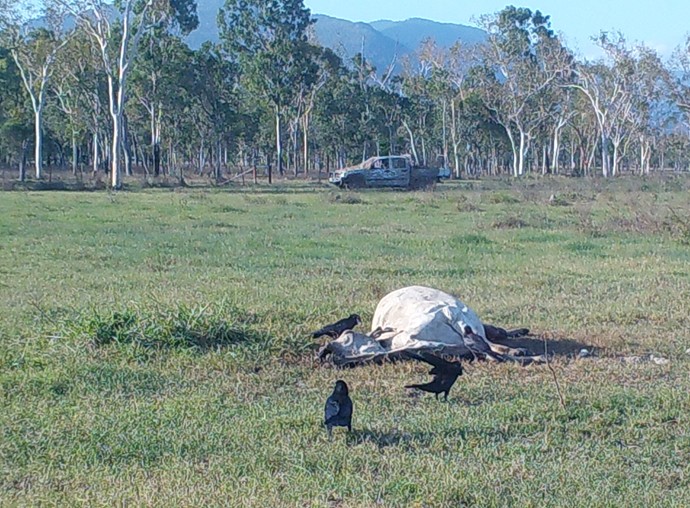
My night time shooting has been based on pigs coming to water, or to stock feed such as molasses, but mostly to carcases. Occasionally pigs will turn up in daylight or at last light, and may still be there at first light. My experience since deploying game cameras however has been that pigs will most commonly arrive from about an hour after last light, and be gone at least an hour before first light. Visits to water or to a fresh carcase may last only a few minutes. Visits to a suitably fermented carcase or to livestock feed may last for hours, with pigs asleep on the ground beside the bait. Initial visits to a carcase will be to investigate the smell or to vacuum up maggots, which takes just a few minutes. Once the carcase breaks, gut contents hit the menu, then salami, and finally more insects from the soil around what remains. Occasionally, pigs may visit in daylight, providing more useful images for compositions like this.
Initially I did my shooting with a light attached to the rifle. Seeing the pig arrive was a job for binoculars – quite effective if there is any sort of moon, but problematic on a dark night. With the vehicle out of sight I would set up in a camp chair perhaps 30 meters from the bait, positioned across the wind to keep my scent away from the expected line of approach, and with some sort of cover to provide protection from an escape rush. This worked well on moonlit nights, but on a moonless night the pig may not be seen until quite close. Indeed, on a moonless night the first indication of a pig being present may be the startled grunt behind the chair.
Pigs move constantly, and an apparently good presentation can turn bad before the light comes on. Or the pig might take fright at the light and offer at best a running shot. On a moonlit night this can be avoided for close shots by shooting without the light. The cross hairs will be invisible, but the pig will be well defined. Putting him in the middle of the scope will usually do the job, though he’s likely to make a run after the shot. I have shot boars as far away as 60 paces with this method, although most were much closer. Remarkably, I never missed one.
A later solution to the light shy pigs was to rig the baits with cheap solar powered security lights. After a while the pigs got used to the lights flashing on and off and came to ignore both the security lights and subsequently also the spotlight.
Then came the Oneleaf NV100 clip on device (US$300). This goes on the back of my Leupold VX1 scope when needed. The NV100 solved the dark nights problem, and the light-shy pigs problem. I am now able to take my time and wait for the right shot, or even a double.
Edit: An important feature of the NV device is the built in video camera. Runners are a fact of life with night shooting, and they don't have to go far to be lost in the dark. Video playback can confirm straight away that the aim was good.
Using the NV I can also set up further back, with my 4WD as the “blind”. Preferred distance is about 70 meters. I can put some camo net on the vehicle, as in the image, if there’s a moon, but otherwise I don’t bother. Pigs may see the vehicle as just another piece of temporarily parked farm machinery. In any case a white vehicle among trees with white trunks, white termite mounds, and white cattle is not out of place. I suspect also that my being in an enclosed vehicle is a better proposition for scent control than being out in the open – and I don’t have to worry about being run over by a fleeing pig.
Disadvantages of the NV are a small field of view, partly from compounding NV and scope magnification, bad reflection back from intervening vegetation, and a complete whiteout when the shot is fired. A second shot is seldom possible.
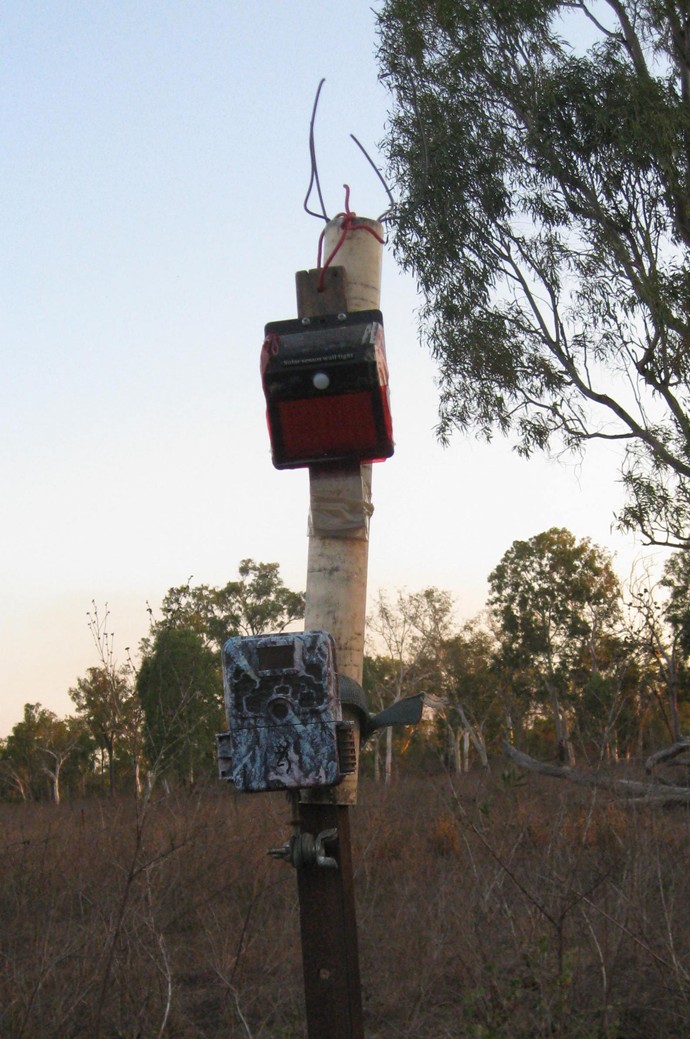
Now when I find a carcase, I set it up with a game camera and a solar powered security light. I also I make sure I have a weed free path for the shot. The purpose of the light has changed. I set it on low, brightening when something arrives. That’s my cue if I have not seen the hog already. The wires above the light are to discourage birds from using the pole as a perch.
Typically I check the camera on the second or third night post mortem. If things are really active it may be worth camping out for the night. Pigs can come from a long way for a carcase – far enough away not to hear the shot that killed an earlier arrival. The interval between arrivals can be as little as an hour. At one site last year I shot six hogs in succession by waiting right through. New arrivals appear unconcerned by the bodies of their predecessors.
The living unconcerned by the dead:
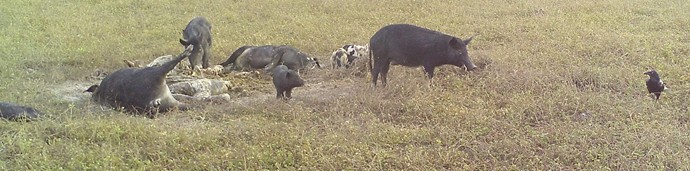
Depending on patronage, a carcase might be useful for a few days to a few weeks, though if attendees are numerous I try to defend the bait by shooting as many as possible as soon as possible.
Tech solutions not yet adopted include thermal scope, cell camera (reception is patchy), battery powered baby monitor (arrival alert on dark nights), and a drone to find the bodies in the morning.
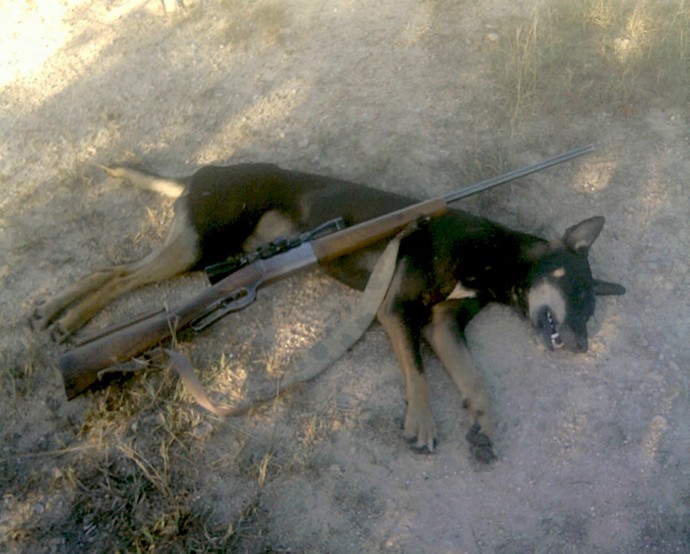
The end point:

You are only as good as your library.


.jpg?width=20 "JBinMN")