
Reading through the posts on the Cast Bullet Association Forum as well as articles in the Fouling Shot Journal, I do not recall seeing any chatter regarding the use of what I believe is the British originated “Figure of Merit” calculation to determine the most efficient cartridge/gun combination. By cartridge, it is meant the whole cartridge assembly including case, propellant, propellant weight, bullet type, bullet weight….ad nauseam. The British routinely used this method of determination to identify their small arms efficiency and pioneered this method in the mid-19th century if my reading comprehension is accurate. I came across this method of cartridge/gun efficiency determination while learning how to “roll my own” British 19th century cartridges, namely the 1853 Enfield cartridge, the 1859 Pritchett cartridge, and the final 1862 58 caliber cartridges with .550” bullets.
While these final cartridges had the most windage, they allowed a rifleman to fire continuously in combat without cleaning the bore of fouling between shots or volleys. Truly amazing cartridges. The 1853 cartridges were the ones used by the 93rd Sutherland Highlanders in the Battle of Balaclava in the Crimean War on 25 October 1854. The Highlanders repulsed the Russian Cavalry and introduced a new paradigm in warfare. When faced with a cavalry charge, the Highlanders abandoned the accepted tactic of “Forming Square” but instead the Highlanders deployed in a 2-file line, a suicide move by Napoleon warfare standards when facing cavalry, and began shooting at the Russian cavalry when they were at 600 yards. This was unheard of but Sir Colin Campbell, knowing the efficacy of his new ammunition and rifled muskets, combined with the unheard-of training of infantry in marksmanship practices, turned the cavalry. This is the origination of the term “The Thin Red Line.”
The Figure of Merit calculation completely removes the human element from the equation since the rifle is rested in the same location shot to shot. Generally, 20 shots are required to get a statistically viable set of data points from which to derive the final calculated Figure of Merit number. The British method when used, required the full 20 shots to be taken for the evaluation of that particular cartridge/gun combination. Sets of data are then compared with each other to determine the lowest Figure of Merit score, indicating the most accurate and efficient combination – or not.
The closest measurement known to this shooter in use by American marksmanship units and ordinance departments is what is termed the “Sheath of Trajectories” where the entire sheath circumference (group on target) is measured and located in the target plane. While sound information can be derived from this measurement method, it entails and encompasses the individual shooter marksmanship skills as well. This evaluation method was used on us to determine the efficiency of a cartridge/rifle/shooter package across evaluation time periods and to apply a hit probability with this weapon system. While not as revealing as a Figure of Merit calculation, it is a useful tool in its own right keeping in mind it incorporates the marksmanship capabilities of the shooter in the calculation.
I bring this all up to address the posts whereby a shooter promotes a 3-shot or 5-shot group at 100 yards as a model of efficiency. While a small 3-shot group is admirable, it really doesn’t frame the whole picture, nor does it address a day afield busting sod poodles. It also does nothing to address the probable shot placement of the FIRST shot from a cold clean barrel. All that being said, the Figure of Merit calculation is an essential tool to use when performing load development in a particular rifle, in my case, a 3-band 1853 Enfield Rifled Musket. Should I use 55 grains of FFG or 60 grains of FFG? Should I use FFG or FFFG powder? Should I use Swiss powder or Elephant powder?
Why we, as handloaders, routinely default to the “3-shot group” as an evaluation tool amazes me. Granted, I don’t really want the expense of a 20-shot group for load or bullet evaluation, when the final determination is on the horizon, the Figure of Merit calculation is indispensable. One can certainly use a 5-shot model to retain or toss out a bullet/load/rifle combination, the 20-shot model shines for that final determination. Again, cost becomes a factor for the individual shooter, as it was for the British Ordinance Department when in use – Gee Whiz, almost 200 years ago.
For those who may be interested in the Figure of Merit tool, it is explained exceptionally well in the British Muzzleloaders You Tube video located here:
Also on the page is a link to download an excel spreadsheet which can be used to arrive at your own Figure of Merit calculations for developing a load/bullet/rifle combination. It is an exceptionally well-engineered spreadsheet and will save a lot of calculator tapping time. Data can simply be input into the fields and excel will calculate the data and present the figures to you.
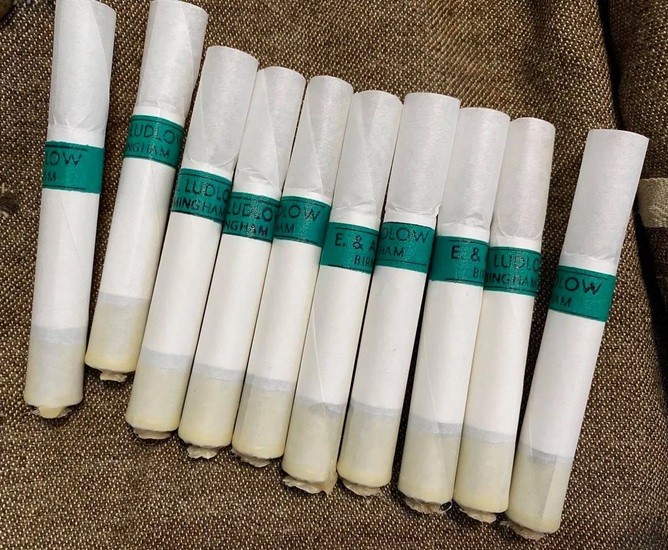
I use the Figure of Merit calculations to minimize my use of lead. As you bullet casters know, the material used in our craft is getting expensive. On my last casting session making 556gr Pritchett bullets, I cast 86 bullets using 6.8 pounds of pure lead. At $2.60/pound with Roto Metals, this works out to almost 21 cents a bullet. Add powder at 60 cents a shot (hazmat fees, shipping, powder), we are up to 80 cents a shot. With caps and paper and lube, we can expect at or slightly more than a buck a shot. Ultimately the large expense with these cartridges is TIME. Not having nimble little fingers anymore, or a factory full of British work-house orphans, it takes a long time for me to roll these cartridges. Of course they can be purchased (powder free) from Brett at Paper Cartridges (https://papercartridges.com/shop/ols/products/550-enfield-cartridges-1859-boxer-pattern) for a modest and appropriate fee if you wish to try the cartridges in your 58 caliber rifled musket of the Enfield or Springfield variants.
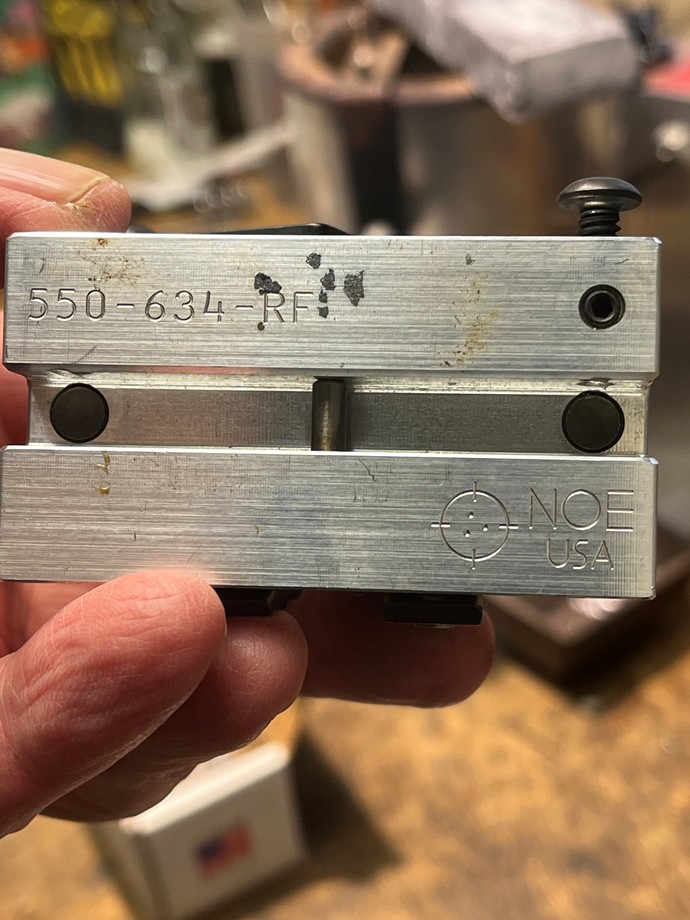
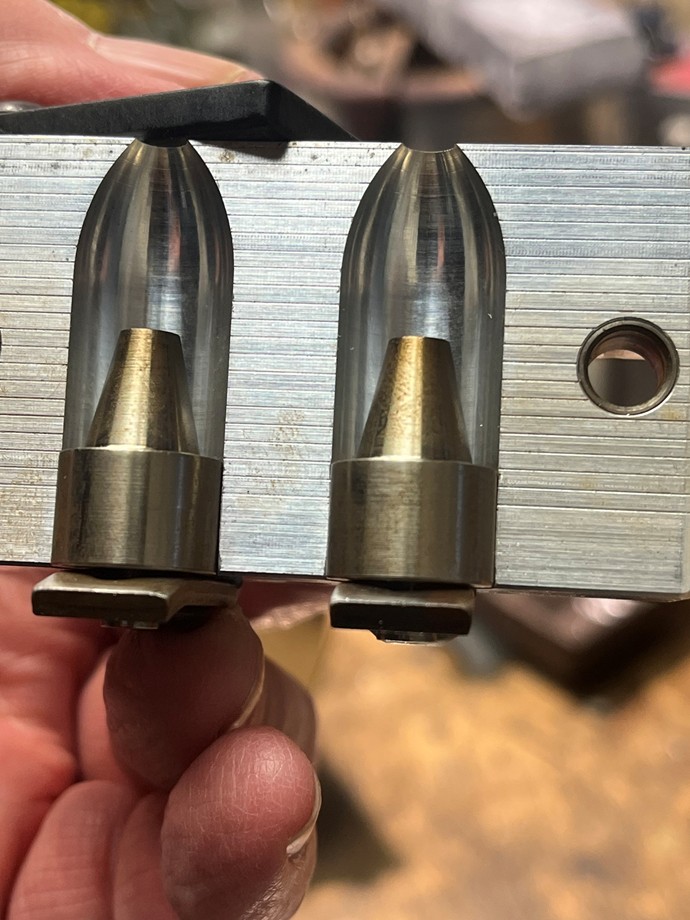
Casting these lead behemoths is quite fun but special considerations must be used (at least by me). Due to their physical size, the alloy, pure lead, needs to be quite hot to cast without wrinkles. I cast at 900° with a fast tempo to keep the mold hot. Since these are hollow base bullets, one can’t allow the integral base spud to cool off. I use the N.O.E. 2-cavity bullet mold for this which performs very well at high casting temperatures. The aluminum mold requires a faster cadence to keep it hot. Using the Old West .560 bullet mold made of brass, allows for a slightly slower cadence but the trade-off is a heavier mold. One would think that I would have Popeye forearms by now but alas, I do not.
After an afternoon casting these barn busting bullets, then toting around and handling a 11-pound rifle, shooting slowly from a rest position for my Figure of Merit score is definitely in the cards for me. Those at the range that day who actually recognize a real charcoal burning rifle are always amazed at seeing the cartridges being loaded, then the rifle fired shot after shot without a cleaning or jammed up bullet. Their education in this type of Civil War musketry has always been television movies and the repeated literary references to jammed up rifles after 3 or 4 shots. Of course, when shooting a naked Minie’ ball so often used by both the Union and Confederate warring factions, a fouled musket was the inevitable result. The British of course, figured out how to overcome this issue with their “English Cartridges”, clearly shown on Brett’s Paper Cartridges web page or his Facebook page with the same name. The British were bewildered that the warring American forces would use naked bullets, foul their rifles, and then try to club each other to death with a useless musket.
I suggest that when casting off your own bullets and working up loads, especially for the rifles, you use the Figure of Merit calculator. Those of you shooting powder coated bullets and espousing their increased accuracy may actually be surprised to discover that powder coated bullets have no advantage whatsoever over greasers when calculating the Figure of Merit between the two types of bullets from the same mold, over the same charge, in the same rifle.
So, I ask out of curiosity, have any of you used the Figure of Merit calculation for your cast rifle bullets for any comparative purposes or bullet performance measurement?
With rifle in hand, I confidently go forth into the darkness.


